Water · peacebuilding
Shared Water, Shared Voice
The problem
When water points are unreliable or decisions are made without residents, scarcity can deepen mistrust and place an unequal burden on women and children.
The idea
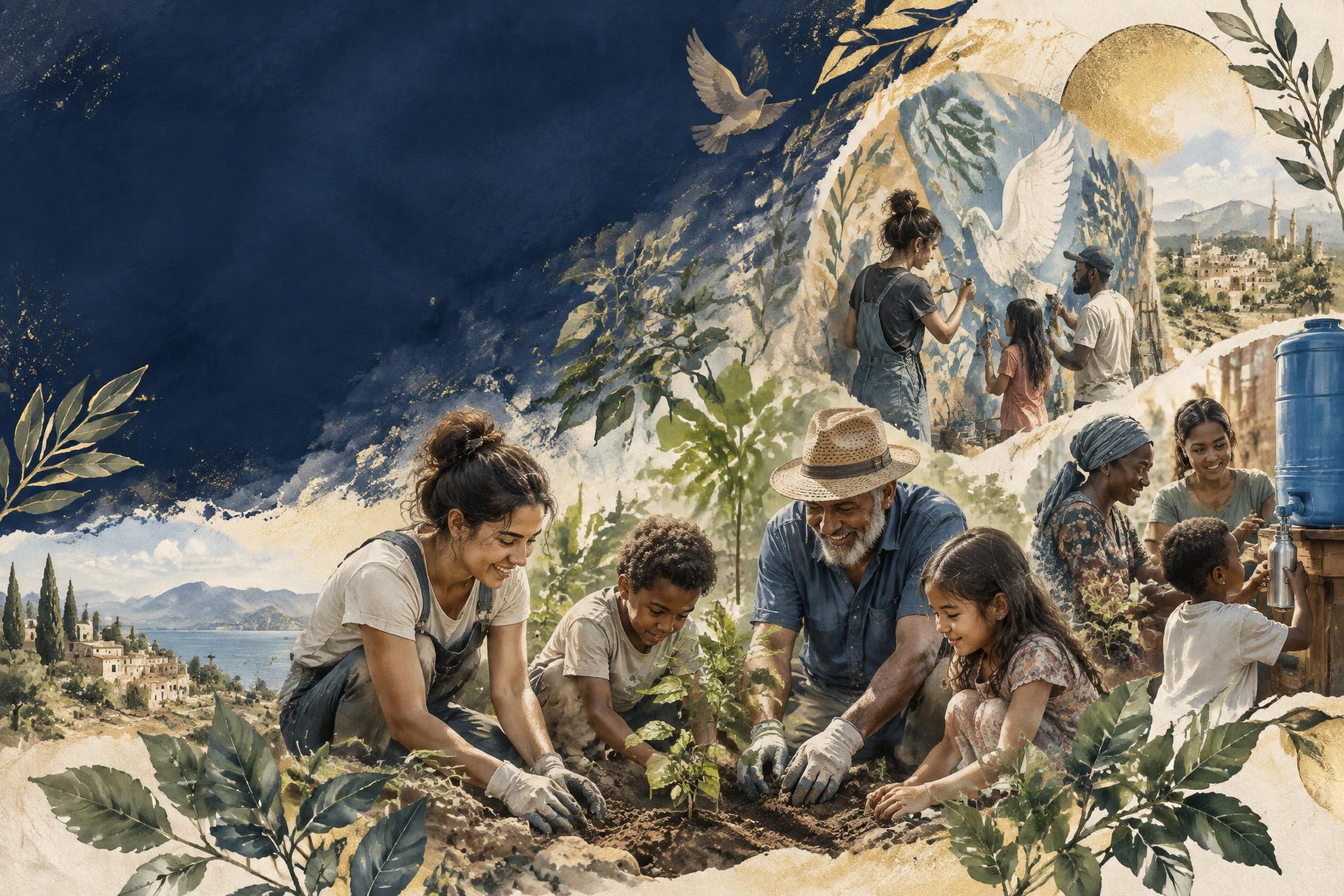
Bring residents, water workers and local leaders together to map access, agree fair-use norms and repair one shared water point through transparent community stewardship.
How it works
- 1Walk the neighbourhood and map who collects water, when, and what barriers they face.
- 2Hold a listening circle with women, young people, older residents and water workers.
- 3Select one feasible repair or access improvement and publish responsibilities openly.
- 4Create a rotating community care team and a simple issue-reporting method.
- 5Review access, waiting time and conflict reports after 30 and 90 days.
Who can participate
Residents, women’s groups, youth, local technicians, civic leaders and health workers.
What you need
Printed map, accessible meeting place, repair assessment, modest materials budget and a named technical partner.
Measure
Waiting time, number of households served, breakdown days, participation diversity and conflicts resolved.